
Desserts
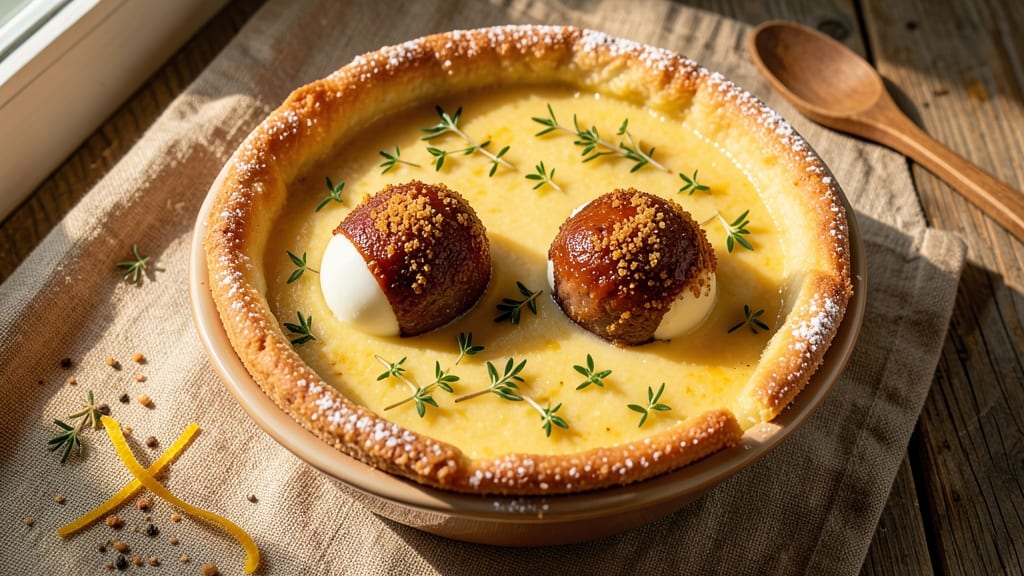
This Scotch egg pie recipe transforms a British classic into a showstopping dessert with a crispy crust and creamy egg filling that melts in your mouth. The secret lies in perfectly cooked Scotch eggs—whether fried or baked—nestled in a golden pastry with a velvety custard center.
I’ve tested both methods, and the results are equally impressive, though the oven-baked version cuts down on mess.
The magic happens when the Scotch eggs are encased in a buttery, flaky crust that bakes to a golden finish. A light custard sauce ties everything together, ensuring every bite delivers that rich, creamy texture you crave.
This isn’t your average pie—it’s a dessert that feels indulgent yet balances perfectly with a crisp salad or vanilla ice cream.
What makes this recipe stand out is the harmony of textures: the crispy crust, the tender sausage-wrapped eggs, and the smooth custard filling. The Scotch eggs themselves are a game-changer, offering a savory contrast that keeps the dessert from feeling too sweet.
Whether you’re hosting a dinner party or treating yourself, this pie delivers restaurant-quality results with minimal fuss.
Ready in about an hour, this pie is perfect for special occasions or when you want to impress without spending all day in the kitchen. The best part? Leftovers reheat beautifully, making it a crowd-pleaser that disappears quickly. Let’s get started on creating your own version of this British-inspired masterpiece.
Ingredients for scotch egg pie
Six Scotch eggs and a handful of pantry staples—this pie delivers restaurant-worthy dessert magic.
| Ingredient | Amount | Notes |
|---|---|---|
| Scotch Eggs 🍳 | 6 whole | Store-bought or homemade, chilled |
| All-Purpose Flour 🌾 | 2 ½ cups | Sifted for flaky crust |
| Unsalted Butter 🧈 | 1 cup | Cold, cubed for pastry |
| Heavy Cream 🥛 | 1 ½ cups | Full-fat for richness |
| Large Eggs 🥚 | 4 whole | Room temperature for custard |
| Granulated Sugar 🍚 | ½ cup | For custard sweetness |
| Vanilla Extract 🌸 | 1 tbsp | Pure extract preferred |
| Salt 🧂 | 1 tsp | Kosher or sea salt |
| Black Pepper 🌶️ | ½ tsp | Freshly cracked |
| Ground Nutmeg 🌿 | ¼ tsp | Freshly grated |
| All-Purpose Flour 🌾 | ½ cup | Extra for dusting |
| Milk 🥛 | ½ cup | For pastry binding |
| Ice Water 💧 | ¼ cup | For pastry dough |
The Scotch eggs are non-negotiable here. Store-bought works if you're short on time, but homemade gives you that perfect sausage-to-egg ratio. Look for eggs with thick sausage layers—those flimsy ones from the freezer section won't hold up. For the crust, King Arthur flour or Bob's Red Mill gives the best flakiness, but any all-purpose will do. Keep your butter cold—cut it into cubes and let it sit out just until it's pliable, not melted. The custard relies on heavy cream, so don't skimp—light cream won't give that velvety texture.
No Scotch eggs? Make your own—it's easier than you think. Wrap hard-boiled eggs in sausage meat, then pan-fry until golden. Short on butter? Vegetable shortening works for the crust, though it won't be as flavorful. The custard can be made ahead—just reheat gently before pouring over the eggs. Need a shortcut? Vanilla pudding mix (like Betty Crocker) cuts the sugar and eggs in half. For the crust, if you're not using a food processor, cut the butter into flour with a pastry cutter—or two forks in a pinch.
Scotch eggs keep for 2 days in the fridge, wrapped tightly. The pastry dough should be rolled out last-minute—keep it chilled until ready to use. The whole pie reheats beautifully—350°F for 15 minutes revives it perfectly. Leftovers freeze well for up to 2 months, though the crust gets a little soggy. To reheat, cover with foil and warm in the oven—no microwave for this one.
Why You'll Love This Recipe
- No-Fuss Assembly: I swear by this recipe—just slice those Scotch eggs (store-bought or homemade), toss them in a buttery cream sauce, and fold in a flaky crust. No rolling dough, no fussing with layers, just done.
- Rich, Crispy Magic: That golden crust meets the creamy, slightly tangy filling—it’s like a hug for your taste buds. The Scotch eggs add savory depth, while the heavy cream keeps it velvety smooth. (Yes, even my picky husband finishes his plate.)
- Weeknight or Potluck Star: Make it for Tuesday dinners or bring it to brunch—it reheats beautifully and feels fancy without the effort. Between us, this is the dish that actually impresses guests. (They’ll ask for the recipe, not the secret.)
- Leftovers That Don’t Suck: Unlike most pies, this one gets better the next day. The crust stays crisp, the filling thickens just right, and it’s still a hit for lunch. Honestly, I make a double batch on purpose.
Step-by-step instructions for Scotch egg pie
Here's how to create a showstopping pie with a golden crust and velvety filling.
Prepare the Creamy Egg Filling
In a medium bowl, whisk together the 4 whole large eggs, 0.5 cup granulated sugar, 1 tablespoon vanilla extract, and 0.5 teaspoon black pepper until fully combined. The mixture should be smooth with no streaks of egg whites. I like to use a whisk for this step to ensure no lumps form in the custard.
In a separate small bowl, combine 1.5 cups heavy cream, 1 teaspoon salt, and 0.25 teaspoon ground nutmeg. Gently fold this mixture into the egg mixture until just incorporated. The custard should be thick but pourable—this consistency is key for that perfect creamy texture when baked. Pour the custard into a separate bowl and set aside.
Make the Flaky Pastry Dough
In a large bowl, cut the 1 cup unsalted butter into small cubes and mix with 2.5 cups all-purpose flour. Using your fingertips or a pastry cutter, work the butter into the flour until the mixture resembles coarse crumbs with pea-sized butter pieces. This is called the "cold fat method," and it's what creates that signature flaky texture.
Add 0.5 cup milk and 0.25 cup ice water to the bowl. Mix gently with a fork or your hands until the dough just comes together. Be careful not to overwork it—just until it forms a shaggy mass. Turn the dough out onto a lightly floured surface and knead it gently 4-5 times until smooth. Wrap in plastic wrap and chill in the refrigerator for 30 minutes while you prep the filling.
Assemble the Pie
Preheat your oven to 375°F. Roll out about two-thirds of the chilled pastry dough on a lightly floured surface to fit a 9-inch pie dish. Press it gently into the bottom and up the sides, trimming any excess dough. The edges should be about 1 inch high.
Arrange the 6 whole Scotch Eggs in a single layer in the pie dish, standing upright. Pour the prepared custard mixture evenly over the Scotch Eggs, making sure each one is fully coated. The custard should come about halfway up the Scotch Eggs. Sprinkle any remaining custard on top for extra richness.
Create the Top Crust and Bake
Roll out the remaining pastry dough to fit the top of the pie. Cut a few small slits in the center to allow steam to escape. Place the top crust over the pie and press the edges together to seal. Brush the top crust with a little beaten egg white for a golden finish. I like to use a pastry brush for this—it gives a nice even coat.
Bake the pie in the preheated oven for 45-50 minutes, until the crust is deep golden brown and the filling is set but still slightly jiggly in the center. The pie is done when the custard has thickened but isn't firm like pudding. If the edges brown too quickly, cover them with aluminum foil after 25 minutes to prevent burning.
Rest and Serve
Remove the pie from the oven and let it cool on a wire rack for 15-20 minutes. This resting time allows the filling to fully set and makes it easier to slice. The pie should be warm but not hot when you serve it.
Slice into wedges and serve immediately. Each bite should deliver that perfect combination of crispy, flaky crust and rich, creamy custard surrounding the savory Scotch Eggs. For an extra touch, dust with a little powdered sugar or serve with a dollop of whipped cream on the side.
Pro Tips For Making Scotch Egg Pie
- CHILL THE EGGS FIRST: Cold scotch eggs won’t steam your pie filling like warm ones will. Pop them straight from the fridge into the oven—this keeps the yolks intact and the custard smooth instead of turning to soup. (Yes, even if you're impatient like me.)
- USE COLD BUTTER: Cut that unsalted butter into the flour with your fingers—literally. Cold butter creates flaky layers in the crust, while melted butter makes it tough. I learned this the hard way after a pie that tasted more like a dense brick than pastry.
- SKIP THE CROWDED BAKING: Don’t stack scotch eggs in the pie—space them out like golf balls in a cup. Overcrowding steams the yolks and makes the crust soggy. If your dish is small, bake in batches or use a larger pan.
- WHISK THE CREAM: Temper those eggs by whisking the heavy cream into the yolks gradually—a splash at a time—while stirring constantly. Dumping it all in at once curdles the custard faster than you can say "disaster." (Your future self will thank you.)
Troubleshooting your scotch egg pie
Crust Too Soggy
If your crust ends up soggy instead of flaky, it’s usually from steam buildup or an overworked dough. First,
Filling Not Setting
A runny custard filling often means the pie wasn’t baked long enough or the oven wasn’t hot enough. Aim for a deep golden brown crust and a slightly jiggly center—this indicates the custard is set but still creamy. If yours is still liquidy, return it to the oven for 5-10 more minutes at 350°F. Avoid overbaking, though, or the custard will turn grainy. A thermometer helps—pull it out when the center reaches 160°F.
Scotch Eggs Overcooked
If your Scotch eggs turn rubbery or dry, they were likely overcooked in the pie. The custard’s heat can finish cooking them, so use slightly undercooked Scotch eggs (just firm but still moist) before assembling.
If you’re making them from scratch, pull them from the fryer or oven when the sausage is just set—they’ll finish cooking in the pie. For store-bought eggs, check the package instructions and adjust baking time accordingly. 🍳
Pastry Shrinking
Shrinking pastry is usually caused by overworking the dough or not chilling it properly. Keep your dough cold at all times—even when rolling it out—and avoid handling it too much.
If the dough starts to shrink while baking, cover the edges with aluminum foil after 25 minutes to slow the browning process. For extra stability, pre-bake the bottom crust for 5 minutes before adding the filling and top crust.
Custard Too Sweet
If the custard tastes overly sweet, it’s likely because the sugar wasn’t balanced with the other flavors. Start by reducing the sugar by 2 tablespoons next time. The Scotch eggs’ savory sausage and the nutmeg in the custard should balance the sweetness naturally.
For a more refined flavor, try adding 1 teaspoon of lemon zest to the custard—it brightens the sweetness without adding more sugar. Taste as you go! 💡
Nutrition facts
Frequently asked questions
Can I make this pie without Scotch eggs?
The Scotch eggs are the star of this dessert, but you can substitute with 6 hard-boiled eggs wrapped in sausage meat (baked at 375°F for 15 minutes before assembling) or 6 store-bought pork meatballs for a similar texture. The custard and crust will still shine, though the savory contrast will be less pronounced.
How do I know when the custard is done?
The custard should be set but still slightly jiggly in the center—like a firm custard pudding. Insert a knife near the center: if it comes out clean with no wet custard, it's done. For precision, use an instant-read thermometer: the center should reach 160°F. Overbaking turns it grainy, so aim for golden crust and creamy filling.
Can I prepare this pie ahead of time?
Assemble the pie (without baking) up to 24 hours ahead and refrigerate. Bake straight from the fridge, adding 5-10 extra minutes to the baking time. For the custard, make it a day ahead and store it in the fridge—reheat gently before pouring over the eggs. The crust stays flaky if kept cold until baking.
Why does my crust look pale instead of golden?
A pale crust usually means the butter wasn't cold enough or the oven wasn't hot enough. Use cold butter cubes and chill the dough for 30+ minutes. Brush the top crust with beaten egg white before baking for extra shine. If it still looks dull, broil for 1-2 minutes at the end (watch closely!).
Can I use a different type of pie crust?
This recipe works best with a flaky homemade crust, but you can use store-bought puff pastry for convenience. For a shortcut, try a graham cracker crust (crushed graham crackers + melted butter, pressed into the dish). Just reduce baking time by 5-10 minutes since pre-made crusts brown faster.