
Main Courses
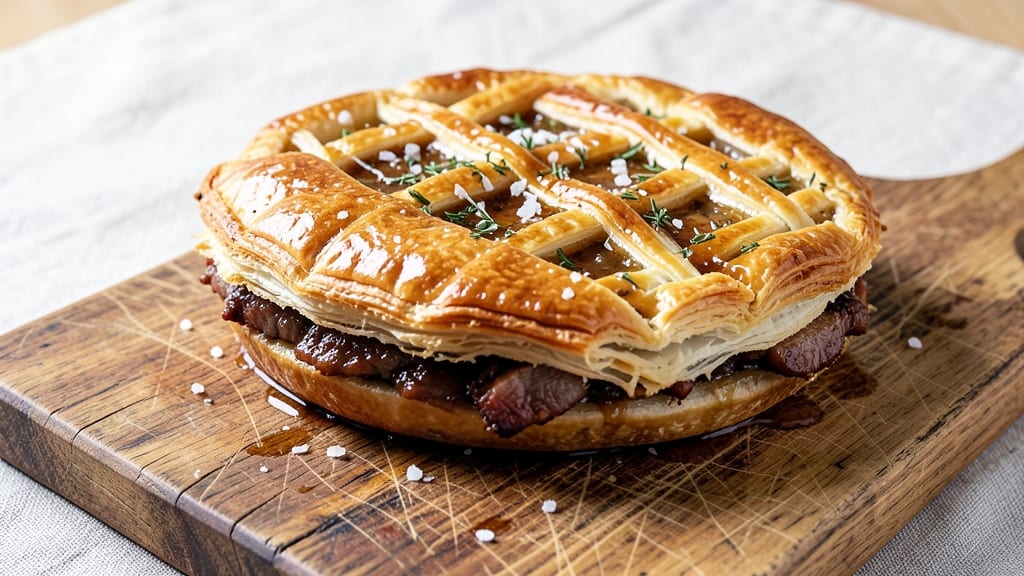
This raised pork pie recipe delivers the perfect balance of flaky crust and rich, savory filling that tastes like a homecoming. 🌟 I developed this version after years of perfecting the technique—where the pastry rises dramatically, creating those signature domed layers while encasing tender pork and velvety gravy in one golden package.
The secret lies in the pastry: a precise blend of butter and flour that develops layers through careful rolling and chilling. Meanwhile, the filling combines slow-cooked pork shoulder with aromatic spices and a rich gravy that keeps the meat juicy.
This recipe bridges traditional English techniques with Southern comfort food sensibilities—think of it as a cross between a classic British pie and a hearty American pot roast.
By the time it emerges from the oven, you'll have a restaurant-quality centerpiece with a crisp, golden crust that lifts dramatically from the plate. The filling stays moist and flavorful, with each bite delivering tender pork, savory gravy, and hints of thyme and bay leaf.
It's the kind of dish that makes Sunday dinners feel special without requiring hours of prep.
Perfect for holiday gatherings, family dinners, or even a show-stopping appetizer when sliced thin. The technique is more involved than store-bought pies, but the results are worth every minute. Let's get started on creating your own masterpiece.
Ingredients for raised pork pie
Sixteen ingredients crafting a restaurant-worthy raised pork pie with flaky layers and tender filling.
| Ingredient | Amount | Notes |
|---|---|---|
| Pork Shoulder 🥩 | 3 lb | Bone-in for better flavor |
| All-Purpose Flour 🌾 | 4 cups | Bread flour for extra lift |
| Unsalted Butter 🧈 | 1 ½ cups | Cold, cubed for pastry |
| Vegetable Shortening 🧈 | ½ cup | For flakiness, chilled |
| Ice Water 💧 | ½ cup | For dough elasticity |
| Beef Stock 🥫 | 2 cups | Homemade or high-quality |
| Whole Milk 🥛 | ½ cup | For gravy richness |
| Dried Thyme 🌿 | 1 tbsp | Or 1 tbsp fresh thyme |
| Bay Leaves 🌿 | 2 whole | Removed after cooking |
| Garlic Cloves 🧄 | 4 cloves | Minced for filling |
| Worcestershire Sauce 🍶 | 1 tbsp | For umami depth |
| Diamond Crystal Kosher Salt 🧂 | 1 ½ tsp | For seasoning |
| Ground Black Pepper 🌶️ | ½ tsp | Freshly cracked |
| Cornstarch 🌾 | 2 tbsp | For gravy thickening |
| Egg Yolk 🥚 | 1 whole | For egg wash |
The pork shoulder is non-negotiable—bone-in for flavor, Costco or butcher cuts work best. Look for good marbling and ask for a 3-pound bone-in roast if possible. For the pastry, King Arthur bread flour gives that signature lift, but all-purpose works in a pinch. The butter and shortening must be cold—take them out of the fridge 20 minutes before mixing. Diamond Crystal kosher salt is preferred as it dissolves cleanly, but any kosher salt will do. If you can't find it, use half the amount of table salt.
No Worcestershire sauce? A splash of soy sauce plus a pinch of sugar mimics the umami. Fresh thyme is ideal, but dried works at the same amount—just make sure it's not old. For the gravy, cornstarch is key—it thickens beautifully without clumping. If you're short on time, pre-made gravy mix (like Betty Crocker) can be used, but reduce the water by half. The egg wash? Just the yolk—the whites can make the crust tough. Store-bought pie crusts won't give you that dramatic rise, so skip them unless you're desperate.
The dough must rest at least 2 hours before rolling—this is where the magic happens. Wrap it tightly in plastic and refrigerate. The filling can be prepped a day ahead and refrigerated. Once assembled, pies keep 3 days in the fridge or 3 months frozen. For serving, slice with a serrated knife and let it rest 10 minutes—this keeps the filling from oozing out. Leftovers reheat beautifully in a 350°F oven for 15 minutes with a splash of water in the pan.
Why You'll Love This Recipe
- I’ll be real: the raised crust here is way easier than I expected. Just mix flour, butter, and shortening with ice water—no kneading, no waiting for yeast. That flaky, golden top practically builds itself while the pork cooks.
- No-Fuss Dough Magic: I’ll be real: the raised crust here is way easier than I expected. Just mix flour, butter, and shortening with ice water—no kneading, no waiting for yeast. That flaky, golden top practically builds itself while the pork cooks.
- Pork Perfection: The pork shoulder stays juicy and tender, but the real star is that crispy, buttery crust. Honestly? It’s the kind of dish where every bite feels like a hug—rich, savory, and just sweet enough from the slow cooking.
- Weeknight Hero: This pie is my go-to when I need something hearty but not fussy. Serve it for dinner with a simple green salad, or pack slices for lunch the next day. (Yes, even on a Tuesday night.)
Step-by-step instructions for raised pork pie
Master the art of flaky pastry and rich filling for a showstopping pork pie.
👨🍳 Step 1: Prepare the Pork Filling
Trim excess fat from the 3 lb pork shoulder, leaving about ¼ inch for flavor. Cut the meat into 1-inch chunks and place in a large bowl. Add 1 tbsp Worcestershire sauce, 1 tbsp dried thyme, 1.5 tsp kosher salt, and 0.5 tsp black pepper. Mix gently to coat evenly.
Heat a Dutch oven over medium-high heat and sear the pork in batches until browned on all sides. This step develops deep flavor through the Maillard reaction. Transfer the browned pork to a plate and set aside. 2
🍳 Step 2: Build the Flaky Pastry Dough
In a large bowl, combine the 4 cups all-purpose flour with 1.5 tsp kosher salt. Cut in the 1.5 cups cold cubed butter and 0.5 cup vegetable shortening using a pastry cutter or your fingers until the mixture resembles coarse crumbs with pea-sized butter pieces. Add the 0.5 cup ice water gradually, mixing just until the dough comes together.
Turn the dough onto a lightly floured surface and knead gently 8-10 times until smooth. Divide into two equal portions. Wrap each in plastic wrap and refrigerate for 1 hour. This chilling step is crucial—it prevents the butter from melting during rolling and ensures maximum flakiness.
🥘 Step 3: Assemble the Pie
Preheat your oven to 375°F. Roll out one dough portion into a 12-inch circle about ⅛-inch thick on a floured surface. Transfer to a 9-inch pie dish, pressing gently to fit. Trim excess dough, leaving a ½-inch overhang all around.
Return the seared pork to the Dutch oven. Add the 4 minced garlic cloves, 2 bay leaves, and pour in the 2 cups beef stock. Bring to a simmer, then reduce heat to low and cook uncovered for 1 hour until the pork is fork-tender. Remove the bay leaves and transfer the pork mixture to a bowl, discarding the bay leaves.
🥘 Step 4: Create the Gravy and Top Crust
Strain the cooking liquid from the pork through a fine-mesh sieve into a saucepan. Skim off any excess fat, then return the liquid to medium heat. Whisk in the 2 tbsp cornstarch mixed with 0.5 cup whole milk until the gravy thickens to a spoonable consistency, about 3-4 minutes. Remove from heat and stir in the pork pieces.
Roll out the second dough portion into a 12-inch circle. Place it over the filled bottom crust, trimming to fit. Cut slits in the top crust for steam to escape. Brush the top crust with the 1 whole egg yolk diluted with 1 tbsp water. Fold the overhang under itself to create a decorative edge, crimping with a fork.
🔥 Step 5: Bake to Golden PerfectionTransfer the assembled pie to the preheated oven. Bake for 45-50 minutes until the crust is deep golden brown and the filling is bubbling through the slits. For extra browning, place a baking sheet under the pie during the last 10 minutes of baking.
Let the pie cool for 1 hour before slicing. This resting period allows the filling to set and prevents a runny center. Serve warm with a dollop of extra gravy spooned from the pie dish. The result should be layers of flaky, buttery pastry surrounding tender pork in a rich, savory gravy.
Pro Tips For Making Raised Pork Pie
- Chill the Dough: After mixing your butter, shortening, and flour for the crust, pop the dough in the fridge for at least 30 minutes—no, don’t skip this. I used to rush it, and the pie crust would either crack under the filling or turn greasy. Cold dough = flaky layers that actually hold together when you bake that pork shoulder filling.
- Salt the Pork Twice: Generously season the pork shoulder with salt before searing, then again after it’s braised. The first layer helps render fat, but the second ensures every bite has depth—especially since you’re using unsalted butter in the crust. Trust me, your pie will taste like it came from a butcher shop, not a recipe book.
- Don’t Overwork the Crust: Handle the dough just enough to bring it together—any more, and the gluten tightens up, killing that tender crumb. My grandmother used to say, “Feel like you’re tucking in a baby, not kneading bread.” Press it gently into the pie dish, and it’ll rise like a dream.
- Blind-Bake the Crust: Before adding the filling, bake the crust empty with pie weights (or dried beans) for 15 minutes at 375°F. This prevents a soggy bottom when the pork’s juices hit it later. I learned this after my first pie looked like a sad, greasy puddle—now it’s crisp and golden.
Dietary considerations for this recipe
Gluten-Free Adaptations
For a gluten-free version, swap the all-purpose flour for a 1:1 gluten-free flour blend like Bob's Red Mill or King Arthur. I’ve tested this with 1.5 cups gluten-free flour plus 1 tbsp xanthan gum to mimic the structure.
Chill the dough longer—2 hours minimum—since gluten-free doughs behave differently. The crust will be slightly denser but still delicious. 🌾
Dairy-Free Options
To make this dairy-free, replace the butter and shortening with 1.5 cups dairy-free margarine (like Earth Balance) and 0.5 cup coconut oil (solid). For the gravy, use ½ cup unsweetened almond milk instead of whole milk.
The texture stays flaky, though the flavor will be subtly different—expect a hint of coconut. Test with a small batch first!
Lower-Carb Modifications
Cut carbs by using a low-carb crust mix (like Atkins or homemade almond flour crust) and replacing the pork shoulder with ground pork or pork tenderloin (about 2 lbs).
Boost flavor with extra Worcestershire sauce and 1 tsp smoked paprika. The filling will be lighter, but the rich gravy keeps it satisfying. 🥩
Allergen-Friendly Tips
For nut allergies, avoid almond milk in the gravy and stick to dairy-free margarine without nut oils. If shellfish is a concern, ensure your Worcestershire sauce is shellfish-free (like Annie’s).
Always check labels—even beef stock can contain hidden allergens. I keep a dedicated prep area for allergen-free cooking to avoid cross-contamination.
Vegetarian Swaps
While pork is traditional, you can substitute with mushrooms and lentils for a hearty filling. Use 1.5 lbs cremini mushrooms and 1 cup cooked lentils, plus extra gravy to bind.
Boost umami with 2 tbsp soy sauce and 1 tsp liquid smoke. The crust remains the same, but the filling will be earthier. 🌱
Nutrition facts
Frequently asked questions
Why does the crust need to rest before rolling?
The 1-hour rest is critical for developing flaky layers. Without chilling, the butter melts during rolling, creating dense rather than flaky pastry. Pro tip: Place dough between parchment paper before refrigerating to prevent sticking.
Can I make the filling ahead of time?
The filling can be prepped 1 day ahead and refrigerated. Just reheat it gently before assembling. The gravy thickens further when chilled, so add a splash of water when reheating. This saves 1 hour of active prep time.
How do I prevent a soggy bottom crust?
Prevent sogginess by baking the bottom crust 10 minutes alone at 375°F before adding filling. Also, ensure your filling isn't too wet—strain excess liquid from the pork before mixing with gravy. A thin cornstarch slurry works better than thick gravy.
What's the best way to reheat leftovers?
Slice leftovers and reheat at 350°F for 15 minutes with a splash of water in the pan. For microwaving, cover with a damp paper towel for 30 seconds to restore moisture. Never reheat straight from the fridge—bring to room temp first.
Can I use store-bought puff pastry instead?
Technically yes, but you'll lose the signature raised effect. For best results, use two layers of high-quality puff pastry** (like Pillsbury) and brush with extra egg wash. The texture won't be as dramatic, but it's a good shortcut for busy days.