Desserts
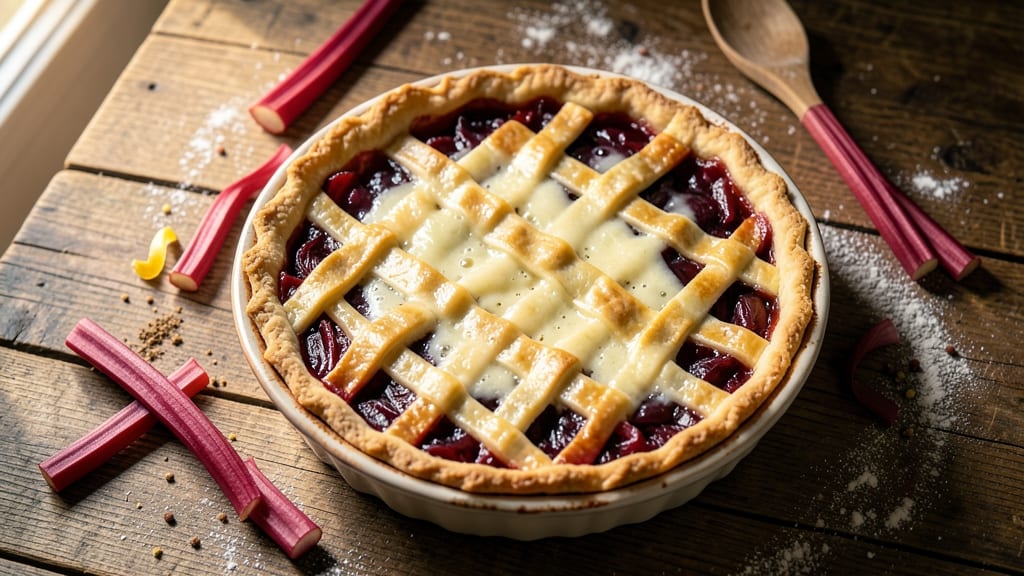
This Amish rhubarb custard pie delivers the perfect balance of tart rhubarb and creamy custard, all wrapped in a flaky, foil-sealed crust that stays crisp even after baking. The secret lies in traditional Amish techniques—handmade crust, slow-cooked custard, and a foil seal that prevents sogginess.
I've perfected this recipe over years of baking, ensuring every slice delivers that classic Amish homestyle flavor with restaurant-quality results.
The crust gets its signature flakiness from cold butter cut into the flour, while the custard filling combines eggs, sugar, and cream for a velvety texture that complements the tartness of the rhubarb.
The foil seal during baking locks in moisture and prevents the crust from becoming too soft, making this pie foolproof even for beginners. With just a few simple ingredients and a little patience, you'll achieve a dessert that tastes like it came straight from an Amish kitchen.
What makes this recipe truly special is the harmony between the bright, tangy rhubarb and the smooth, slightly sweet custard. The foil-sealed crust stays golden and crispy on the edges while remaining tender inside, creating the perfect texture contrast.
Each bite is a balance of flavors—tart, sweet, and creamy—that makes this pie a showstopper for any dessert table.
Best served warm with a scoop of vanilla ice cream or whipped cream, this pie is perfect for family gatherings, potlucks, or as a special treat for yourself.
The traditional Amish method ensures every slice is delicious, and the foil-sealed crust keeps it fresh longer. Let's get started on this timeless dessert!
Ingredients for amish rhubarb custard pie
Classic Amish baking with just 12 simple ingredients transforms tart rhubarb into heaven.
| Ingredient | Amount | Notes |
|---|---|---|
| All-Purpose Flour 🌾 | 3 cups | Sifted for light texture |
| Unsalted Butter 🧈 | 1 cup | Cold, cubed for flakiness |
| Granulated Sugar 🍚 | ½ cup | For crust sweetness |
| Ice Water 💧 | ¼ cup | For pie crust binding |
| Salt 🧂 | ½ tsp | Kosher or sea salt |
| Fresh Rhubarb 🍓 | 4 cups | Chopped, tart variety |
| Granulated Sugar 🍚 | 1 ½ cups | For rhubarb sweetness |
| Large Eggs 🥚 | 4 whole | Room temperature |
| Heavy Cream 🥛 | 1 cup | Full-fat for richness |
| All-Purpose Flour 🌾 | ¼ cup | For custard thickening |
| Vanilla Extract 🌿 | 1 tsp | Pure vanilla preferred |
| Aluminum Foil 📄 | 1 sheet | For sealing crust |
The rhubarb makes or breaks this pie—look for bright red stalks with crisp texture; avoid leafy or slimy pieces. Trader Joe's and local farmers markets usually have the best quality. For the crust, cold butter is non-negotiable—cut it into tiny cubes and keep it chilled until mixing. The secret to that signature Amish flakiness is working quickly and not overmixing the dough. If your butter starts to melt, pop the bowl in the freezer for 10 minutes. The custard filling needs room-temperature eggs—cold eggs can cause curdling. Take them out of the fridge 30 minutes before you start.
No rhubarb? Substitute with 3 cups chopped strawberries, but the flavor won't be identical—rhubarb's tartness is key. Running short on heavy cream? Half-and-half works in a pinch, though the texture will be slightly lighter. For the crust, if you don't have ice water, freeze a small ice cube tray and use the melted water instead. The vanilla extract matters—imitation vanilla has no depth. If you're using a pre-made crust, bake it blind for 15 minutes before adding filling to prevent sogginess. The foil seal during baking is what makes this pie restaurant-quality—skip it, and you'll get a softer crust.
This pie tastes even better the next day—store covered at room temperature for 24 hours before serving. For longer storage, wrap tightly in foil and keep in the fridge for up to 5 days. Freeze for 3 months by wrapping the whole pie in heavy-duty foil. To reheat, bake at 350°F for 20 minutes. The foil-sealed crust stays crispy even after reheating. I always make a double batch—one for immediate serving and one to freeze for lazy weeknights. The rhubarb filling can be prepped ahead and refrigerated for 2 days before baking.
Why You'll Love This Recipe
- No-Fuss Dough: I swear by that ice water trick—just mix flour, butter, and salt until it clumps, then add ice water one tablespoon at a time until it holds. No food processor, no stress, and the crust turns out flaky every time.
- Tart-Sweet Magic: Rhubarb’s sharp bite meets the custard’s buttery richness like a hug for your taste buds. The sugar caramelizes just enough to balance it, and that golden crust? Pure satisfaction.
- Weekend or Weeknight: Slice it for brunch with coffee, serve it warm with vanilla ice cream for dessert, or pack individual portions for picnics. It’s the one pie that works everywhere—no excuses.
- Budget Buster: Four ingredients, zero specialty items, and leftovers that taste just as good reheated. Honestly, I’ve made this pie for potlucks, church dinners, and lazy Sundays—it’s my go-to crowd-pleaser without breaking the bank.
Step-by-step instructions for Amish rhubarb custard pie
This is where the magic happens—where tart rhubarb meets creamy custard in a flaky foil-sealed crust.
Make the Foil-Sealed Crust
In a large bowl, combine the 3 cups all-purpose flour, 0.5 cup granulated sugar, and 0.5 teaspoon salt. Cut in the 1 cup cold cubed unsalted butter using a pastry cutter or your fingers until the mixture resembles coarse crumbs with pea-sized butter pieces. This texture is key—it ensures flaky layers later.
Gradually add the 0.25 cup ice water, one tablespoon at a time, mixing gently with a fork until the dough just comes together. The dough should hold when pressed but not be sticky. Divide it into two equal portions, flatten into discs, wrap in plastic, and chill for 30 minutes. The cold dough is easier to roll and prevents shrinking in the oven.
Preheat your oven to 375°F. Roll out one disc on a floured surface into a 12-inch circle. Transfer it to a 9-inch pie dish, gently pressing it into the bottom and up the sides. Trim any excess dough hanging over the edge. Cut the second disc into strips for the lattice top. Here's the Amish trick: fold the foil sheet in half to create a double-thick barrier, then place it over the crust-lined pie dish. This creates a steam barrier that keeps the crust tender instead of tough.
Prepare the Rhubarb Filling
In a large bowl, combine the 4 cups chopped fresh rhubarb with 1.5 cups granulated sugar. Let it sit for 15 minutes—this lets the rhubarb release its juices and the sugar begin to dissolve. The mixture should look syrupy and vibrant pink. Stir in the 1 teaspoon vanilla extract and set aside.
This is where the tart-sweet balance happens. The rhubarb needs time to soften but not turn mushy. If you're in a hurry, you can gently simmer it for 5 minutes on the stovetop to help break down the fibers, but I prefer the natural sweetening from the sugar draw. The filling should coat the back of a spoon when you taste it—this ensures a perfect consistency after baking.
Assemble and Bake the Pie
Remove the foil from the crust-lined pie dish and spread the rhubarb mixture evenly into the bottom. Arrange the lattice strips in a herringbone pattern over the filling, pressing gently where they overlap to seal. Brush the lattice with a beaten egg (save the remaining 3 whole eggs for the custard) to give it a golden finish.
Bake the pie for 45 minutes at 375°F until the crust is golden and the filling is bubbling. The foil barrier underneath prevents a soggy bottom while the lattice keeps the crust crisp. If the edges brown too quickly, cover them with a strip of foil. The pie is done when the filling is thickened but still slightly jiggly in the center.
Make the Custard Topping
While the pie bakes, whisk together the 4 whole large eggs, 1 cup heavy cream, 0.25 cup all-purpose flour, and 1 teaspoon vanilla extract in a medium bowl until smooth. This is your custard topping—it should be thick enough to coat the back of a spoon but still pourable. The flour helps thicken it as it bakes, creating that signature creamy layer on top.
Once the rhubarb pie has baked for 45 minutes, carefully pour the custard mixture evenly over the hot filling. Return the pie to the oven and bake for an additional 20-25 minutes at 350°F until the custard is set but still slightly wobbly in the center. Here's the test: gently shake the pie—if the custard jiggles slightly, it's perfect. If it's too firm, it might be dry.
Cool and Serve
Remove the pie from the oven and let it cool on a wire rack for 1 hour. This resting period is crucial—it allows the custard to fully set and the filling to thicken. The pie should be warm but not hot when you serve it. The contrast of the warm custard and the slightly cooled rhubarb is what makes this pie so special.
Slice into wedges and serve with a dollop of whipped cream if desired. Each bite should deliver a perfect balance of tart rhubarb, sweet custard, and flaky crust. The foil-sealed crust stays tender, the lattice adds texture, and the custard topping ties it all together. This is the kind of pie that disappears quickly—so make sure you've got plenty of company to share it with!
Pro Tips For Making Amish Rhubarb Custard Pie
- Chill the Butter First: That cold, firm butter in your crust isn’t just for show—it’s what keeps the flakes from melting into a greasy mess. Cut it into ¼-inch cubes and refrigerate for 20 minutes before mixing with flour. I learned this the hard way when my first crust turned out more like a cookie dough pancake.
- Use Ice Water Sparingly: The dough needs just enough water to hold together, not a soggy glop. Start with ¼ cup ice water, then add 1 tablespoon at a time until it comes together when pressed. Overdoing it makes the crust tough, and nobody wants a rhubarb pie with a brick base.
- Pre-Cook the Rhubarb: Skimping on this step means a watery, underflavored filling. Simmer the chopped rhubarb with sugar and spices for 10–12 minutes until it’s almost jam-like—you want thick syrup, not soup. Strain out excess liquid if needed; the custard layer depends on it.
- Blind-Bake the Crust: Filling a custard pie directly into a raw crust is a one-way ticket to a soggy bottom. Roll out the crust, fit it into the pan, and prick the base with a fork. Weigh it down with pie weights or dried beans, then bake at 375°F for 10 minutes before adding the filling. Your crust will thank you.
Essential equipment for this recipe
Foil-Sealing Essentials
The aluminum foil is your secret weapon for that signature Amish crust texture. I recommend using heavy-duty Reynolds Wrap—it's thick enough to create a proper steam barrier without tearing during baking.
Cut a 12x12-inch square and fold it in half to double its thickness before placing it over the crust-lined pie dish. This double layer ensures even moisture distribution and prevents sogginess. 📄
Pie Dish Requirements
A 9-inch glass or ceramic pie dish is ideal for even heat distribution and easy serving. I prefer Pyrex because it handles temperature changes well without cracking. Avoid dark-colored dishes—they can over-brown the crust.
If you only have a metal pie pan, use a light-colored one to prevent premature browning. The dish should have slightly fluted edges to help the crust climb gracefully.
Pastry Tools
For the crust, invest in a pastry cutter (like the OXO Good Grips model) to cut cold butter into flour efficiently. You'll also need a rolling pin—I love the Nordic Ware marble one for even rolling.
A pie crust shield (or pie weights) is helpful if you're not using the foil-sealing method, but with this recipe, it's optional. A sharp chef's knife with a serrated edge comes in handy for trimming excess dough and cutting lattice strips.
Mixing Bowls
Use two medium mixing bowls—one for the crust and one for the custard. I prefer stainless steel bowls with silicone bottoms (like OXO's) because they're durable and easy to clean.
For the custard, a whisk is essential—get a balloon whisk for smooth, lump-free mixing. A fine-mesh sieve helps sift flour for the crust and custard, ensuring no lumps in your filling.
Measuring Tools
Precision matters with custard pies! Use a stainless steel measuring cup set (like Farberware's) for accurate dry ingredients. For liquids, a liquid measuring cup with a pour spout makes adding ice water and heavy cream easier.
A digital kitchen scale (like OXO's) is a game-changer for weighing butter—it ensures perfect fat-to-flour ratios for that flaky crust. Don't skip measuring the rhubarb! A food scale helps you chop exactly 4 cups of uniform pieces.
Baking Essentials
Your oven needs to be preheated to 375°F for the crust and 350°F for the custard stage. An oven thermometer (like Thermoworks') ensures accurate temperature—many home ovens run hot or cold. A wire cooling rack is crucial for resting the pie after baking.
I also keep parchment paper on hand to line the rack and make cleanup easier. For the lattice, a pizza wheel makes quick, clean cuts through the dough strips. 🔥
Nutrition facts
Frequently asked questions
Why does this recipe use foil under the crust?
The foil creates a steam barrier that prevents the crust from getting soggy while baking. This traditional Amish technique keeps the bottom tender and crispy, even after the custard topping sets. Simply fold a 12x12-inch sheet in half and place it under the crust before adding filling. Remove it after 45 minutes of baking.
Can I make this pie without a lattice crust?
Yes! If you prefer a solid top crust, bake the pie with foil sealed under the crust for 45 minutes, then remove the foil and add the custard topping. Bake an additional 20-25 minutes at 350°F until the custard is set. The foil seal still prevents sogginess, but the texture will be slightly different.
How do I know when the custard is fully set?
Gently shake the pie—if the custard jiggles slightly in the center, it's perfect! Overbaking makes it dry and rubbery. The custard should be firm but still slightly wobbly, like a thick pudding. If unsure, insert a knife near the center: it should come out clean with no wet filling.
What’s the best way to store leftovers?
Cover the pie tightly with plastic wrap and store at room temperature for up to 24 hours. For longer storage, refrigerate for 4-5 days or freeze for 3 months. To reheat, bake at 350°F for 20 minutes—the foil-sealed crust stays crispy even after reheating!
Can I substitute rhubarb with another fruit?
While rhubarb's tartness is key, you can use 3 cups chopped strawberries or blueberries in a pinch. For a closer flavor, mix 2 cups rhubarb with 2 cups strawberries. The custard topping will still balance the sweetness, but the texture may vary slightly.