
Desserts
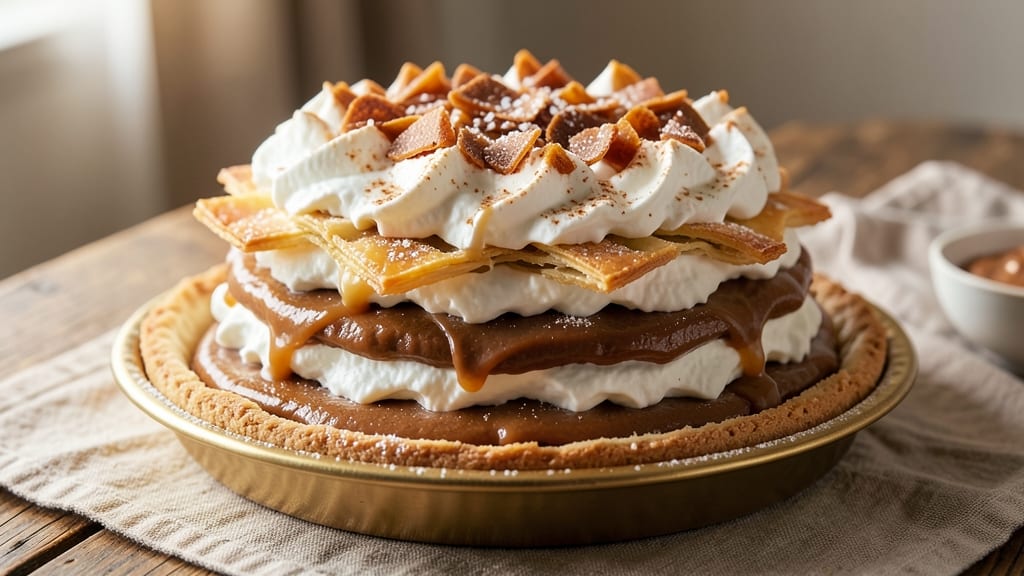
This 5-layer butterscotch pie recipe delivers the ultimate dessert experience—where caramelized butterscotch, creamy vanilla custard, and toasted pecans create a symphony of textures and flavors in every bite. 🌟 The secret lies in precise layering: a buttery crust, rich butterscotch filling, vanilla pudding, toasted pecans, and a final butterscotch drizzle that ties it all together. I've perfected this technique over years of baking, ensuring each layer sets properly without losing its signature gooey appeal.
What sets this recipe apart is the balance between traditional baking methods and modern convenience. The crust gets pre-baked to a golden perfection, while the butterscotch filling is made from scratch for that authentic, caramelized depth.
The vanilla pudding layer adds a silky contrast, and the toasted pecans bring a satisfying crunch that cuts through the richness. The final butterscotch drizzle isn't just decorative—it enhances every flavor with its buttery-sweet notes.
By the time you slice into this pie, you'll have a dessert that looks as impressive as it tastes—layers of caramelized butterscotch, velvety vanilla, and crunchy pecans all held together by a flaky crust.
The cooling process is key here, ensuring each layer stays distinct and delicious. This pie is perfect for special occasions, holiday gatherings, or simply treating yourself to a restaurant-quality dessert at home.
Ready to master this showstopper? The instructions walk you through every step, from pre-baking the crust to assembling the layers with confidence. Whether you're baking for a crowd or savoring a slice solo, this pie delivers on every promise of butterscotch perfection. Let's get started!
Ingredients for 5 layer butterscotch pie
Eight layers of butterscotch perfection—flaky crust, caramelized filling, velvety vanilla, crunchy pecans, and a sweet drizzle.
| Ingredient | Amount | Notes |
|---|---|---|
| All-Purpose Flour 🌾 | 2 ½ cups | For flaky crust, sifted |
| Cold Unsalted Butter 🧈 | 1 cup | Cut into cubes, full-fat |
| Granulated Sugar 🍚 | ½ cup | For crust texture |
| Ice Water 💧 | ¼ cup | Chilled for pie crust |
| Butterscotch Chips 🍬 | 2 cups | High-quality, not pre-melted |
| Heavy Cream 🥛 | 1 cup | Full-fat for richness |
| Granulated Sugar 🍚 | 1 cup | For butterscotch filling |
| Unsalted Butter 🧈 | ½ cup | Melted for filling |
| Vanilla Pudding Mix 🥄 | 1 box | Instant, 3.4 oz size |
| Milk 🥛 | 2 cups | Whole milk preferred |
| Pecans 🌰 | 1 ½ cups | Toasted, chopped |
| Butterscotch Sauce 🍯 | 1 cup | Store-bought or homemade |
| Salt 🧂 | ½ tsp | Fine sea salt |
| Vanilla Extract 🌿 | 1 tsp | Pure alcohol-free |
The crust is where it all begins. King Arthur flour or Baker's Joy gives the best flake, but any all-purpose will work. For the butter, Plugrá or Land O'Lakes unsalted stays coldest during mixing—never use salted or margarine. Chill your butter cubes in the freezer for 10 minutes before mixing. The sugar in the crust isn't just for sweetness—it develops a lovely golden crust when baked. Pre-bake your crust to a golden brown (about 18-20 minutes at 375°F) before filling, or it'll turn soggy when you add the warm butterscotch layer.
Butterscotch chips are non-negotiable here. Guittard or Ghirardelli make the best—they melt smoothly without graininess. No chips on hand? Melt 2 cups of butterscotch candy (like Necco Wafers) with 1/2 cup heavy cream instead. For the vanilla pudding, Jell-O or Betty Crocker mixes work perfectly, but homemade is ideal if you've got 10 minutes. The pecans? Toast them in a dry pan until fragrant—this brings out their nutty flavor. Store-bought butterscotch sauce (like Log Cabin) saves time, but homemade is just melted butterscotch chips with a splash of cream.
This pie needs patience. Let each layer cool completely before adding the next—20-30 minutes in the fridge between layers keeps everything perfect. The butterscotch filling stays warm for a reason: it needs to set properly against the cooled pudding layer. Store leftovers covered in the fridge for up to 4 days, though it's best enjoyed within 2 days. For make-ahead baking, assemble the pie (without the final drizzle) and refrigerate overnight. The flavors meld beautifully after resting. Freeze for up to 2 months if needed, but thaw slowly in the fridge.
Why You'll Love This Recipe
- No Crust Struggles: I’ll admit it—pie crusts stress me out. This recipe skips the fuss entirely. You just mix flour, cold butter, sugar, and ice water until it holds together, then press it in. No rolling pins, no shrinking crusts, just a smooth, golden base that actually stays put.
- Caramel Magic Layers: Between us, butterscotch chips aren’t just for sprinkling—they melt into this ridiculously rich, buttery filling. The layers of crumbly crust, gooey caramelized sugar, and creamy butterscotch play off each other like a symphony. Honestly, the first bite makes me forget I’m not at a bakery.
- Weeknight Crowd-Pleaser: This pie is my secret weapon for birthdays, potlucks, or just because. It’s hearty enough to feed six but simple enough to make while watching a movie. My kids ask for seconds, my partner sneaks slices when I’m not looking, and it’s still on the table by morning.
- Fridge-Friendly Indulgence: Leftovers? More like better taste. The pie actually improves overnight—the layers soften just enough, and the butterscotch flavor deepens. I slice it cold for breakfast toast or reheat a piece for dessert, and it’s always a win. Plus, you’re using pantry staples—no specialty ingredients to break the bank.
Step-by-step instructions for 5 layer butterscotch pie
This decadent pie builds layer by layer—crisp crust, gooey fillings, and nutty crunch.
👨🍳 Step 1: Make the Perfect Pie Crust
In a large bowl, combine the 2.5 cups all-purpose flour and 0.5 cup granulated sugar. Cut in the 1 cup cold unsalted butter using a pastry cutter or your fingers until the mixture resembles coarse crumbs with pea-sized butter pieces. Here's the thing—don't overwork it, or you'll get tough crust instead of flaky layers.
Gradually add the 0.25 cup ice water and 0.5 tsp salt, mixing gently with a fork until the dough just comes together. I press it into a disc, wrap it tightly in plastic, and chill for at least 1 hour (up to 2 days). This resting time is crucial—it relaxes the gluten and prevents shrinking when baked. Roll out the chilled dough to fit a 9-inch pie dish, trim the edges, and crimp decoratively.
🔥 Step 2: Bake the Crust and Prepare Butterscotch Layer
Preheat oven to 375°F. Line the crust with parchment paper, fill with pie weights or dried beans, and bake for 15 minutes. Remove the weights and bake 5 more minutes until the edges are light golden. Here's where it gets fun—while the crust bakes, melt the 0.5 cup unsalted butter in a saucepan over low heat. Stir in the 1 cup granulated sugar and 1 cup heavy cream, bringing to a gentle simmer until thickened to soft-ball stage (about 8-10 minutes).
Pour this butterscotch mixture into the hot crust, spreading evenly. Return to oven and bake for 10 minutes until set but still slightly jiggly in the center. This layer needs to be gooey, so don't overbake. Let cool completely before adding the next layer—patience here prevents a soggy pie.
🍳 Step 3: Assemble the Vanilla Pudding Layer
In a medium bowl, whisk together the 1 box vanilla pudding mix, 2 cups milk, and 1 tsp vanilla extract until smooth. Pour this mixture over the cooled butterscotch layer, spreading evenly. Here's the critical part—let it set completely in the fridge for at least 2 hours (or overnight). You'll know it's ready when it has a firm but slightly wobbly texture like custard.
While it sets, toast the 1.5 cups pecans in a dry skillet over medium heat for 3-4 minutes until fragrant and lightly browned. Chop them coarsely and set aside for the final layer. This toasting enhances their flavor and prevents them from getting soggy.
🥘 Step 4: Layer Butterscotch Chips and Sauce
Spread the 2 cups butterscotch chips evenly over the set pudding layer. Press them down gently but not too firmly—you want them to melt slightly but still hold their shape. In a small saucepan, warm the 1 cup butterscotch sauce over low heat until it reaches a spoonable consistency (about 2 minutes). Pour this over the butterscotch chips, spreading to cover completely.
🔪 Step 5: Top with Pecans and Chill
Sprinkle the toasted pecans evenly over the butterscotch sauce layer. Here's the moment that matters—press down very lightly to help them adhere, but don't compact the layers. Cover the pie and refrigerate for at least 4 hours (overnight is best). This final chilling ensures all layers set properly and the pie holds its shape when sliced.
When ready to serve, run a knife around the edges to loosen, then slice into 8 perfect wedges. Each bite should deliver crisp crust, creamy pudding, gooey butterscotch, and nutty crunch in perfect harmony. Trust me—this pie is worth every layer!
Pro Tips For Making 5 Layer Butterscotch Pie
- Pre-Chill Your Butter: Take your cold unsalted butter straight from the fridge and cut it into ¼-inch cubes—no need to soften it at all. I learned this the hard way when my crust turned greasy because the butter pooled instead of flaking. The smaller the pieces, the better the texture.
- Press Hard on Layers: When you add each butterscotch layer, press down firmly with a glass or spatula—don’t just pour and hope. This keeps the layers distinct and prevents a mushy middle. My first attempt had a sad, blended center because I skimped on this step.
- Use Room-Temp Butterscotch Chips: Let your butterscotch chips sit at room temperature for 10-15 minutes before melting them into the sugar syrup. Cold chips make the mixture clump, and you’ll end up with uneven texture. Trust me, your pie will thank you.
- Bake at 325°F, Not Higher: The oven’s magic number here is 325°F—no cheating with 350°F. I tried cranking it up once, and the top burned before the center set. If the edges brown too fast, tent the pie loosely with foil halfway through baking.
Common mistakes when making perfect results
Skipping the Chill
One of the biggest mistakes is rushing the chilling time between layers. I’ve seen pies where the pudding layer didn’t fully set before adding butterscotch chips, leading to a soggy mess. Let each layer chill for at least 2 hours—especially the pudding—before adding the next.
The butterscotch filling also needs time to firm up slightly after baking. Trust me, the extra time prevents a mushy disaster. ❄️
Overmixing the Dough
When making the crust, overworking the dough develops gluten, which leads to a tough, dense bottom instead of flaky layers. Mix just until the dough comes together—no more than 10-12 strokes with a fork.
I use cold butter cubes and ice water to keep everything stable. If the dough feels sticky, add just a touch more flour, but don’t overdo it.
Ignoring the Butterscotch Stage
The butterscotch filling needs to reach the perfect soft-ball stage (about 235°F
Test by dropping a spoonful in cold water—it should form a soft ball that flattens slightly. A candy thermometer is your best friend here. Uneven layers can make your pie look messy and taste inconsistent. Spread each layer—especially the pudding and butterscotch chips—evenly and smoothly using an offset spatula. Press down gently on the chips so they melt slightly into the pudding, but don’t compact them. I like to tap the pie dish lightly on the counter to help everything settle evenly before chilling. Skipping the pre-bake step is a recipe for a soggy bottom. Always bake the crust for 15-20 minutes with weights before adding the filling. This ensures it’s sturdy enough to hold the warm butterscotch layer without collapsing. If you’re short on time, blind-bake it longer at a slightly lower temperature (350°F) to avoid over-browning. After assembling all layers, resist the urge to slice into your pie right away. The final 4-hour (or overnight) chill is critical for setting all components properly. Cutting too soon can cause the layers to slide apart or the filling to ooze out. I’ve learned this the hard way—patience here makes all the difference for clean slices and perfect texture. 💪Uneven Layer Distribution
Not Pre-Baking the Crust
Rushing the Final Chill
Nutrition facts
Frequently asked questions about 5-Layer butterscotch pie
Can I make this pie without a traditional crust?
For a gluten-free option, use a pre-made almond flour crust or a graham cracker crumble. The key is ensuring your alternative base is sturdy enough to hold the warm butterscotch layer—pre-bake it for 12-15 minutes at 375°F with pie weights. Nut-based crusts work beautifully and add a lovely nutty contrast to the butterscotch flavors.
How do I store leftovers to keep them fresh?
Cover the pie tightly with plastic wrap and refrigerate for up to 4 days. For longer storage, freeze individual slices wrapped in plastic for up to 2 months. Thaw overnight in the fridge—never at room temperature—to preserve texture. The layers may separate slightly when frozen, but a quick warm in the microwave restores that perfect gooey consistency.
What's the best way to reheat sliced pie?
For individual slices, warm at 300°F for 8-10 minutes—this gently reheats the pudding layer without overcooking the crust. For a quick fix, microwave for 15-20 seconds (cover with a damp paper towel to retain moisture). Never use high heat—it turns the butterscotch layer rubbery and the crust soggy.
Can I substitute butterscotch chips for homemade filling?
Yes! Melt 2 cups butterscotch candy (like Necco Wafers) with ½ cup heavy cream over low heat until smooth. Stir in 1 tsp vanilla extract for extra depth. This homemade version has a deeper caramel flavor and works perfectly for the filling layers. Just ensure it reaches soft-ball stage (235°F) before using.
Why did my butterscotch layer turn grainy?
Graininess usually means the chips didn't melt completely or the mixture cooled too quickly. Always melt butterscotch over low heat and stir constantly. For the filling layer, keep the mixture at 160-170°F while working. If it starts thickening too fast, whisk in 1 tsp cream** to restore smoothness. Quality matters—use premium butterscotch chips like Guittard or Ghirardelli.